For apartment dog owners
Does your dog bark at every hallway noise?
Footsteps. Keys. Doors closing. Your dog hears something outside and starts barking again. This 12-page PDF shows you how to manage hallway sounds, teach calmer responses, and practice with a simple 7-day starter plan.
- Reduce the impact of hallway noises at home
- Set up a quiet, comfortable space for your dog
- Teach your dog to settle on their bed
- Practice responding calmly to everyday sounds
- Follow a 7-day starter plan with a progress tracker
“Every time someone walked past our apartment door, my dog would start barking. I liked that the guide gave me simple steps instead of overwhelming me with training advice.”
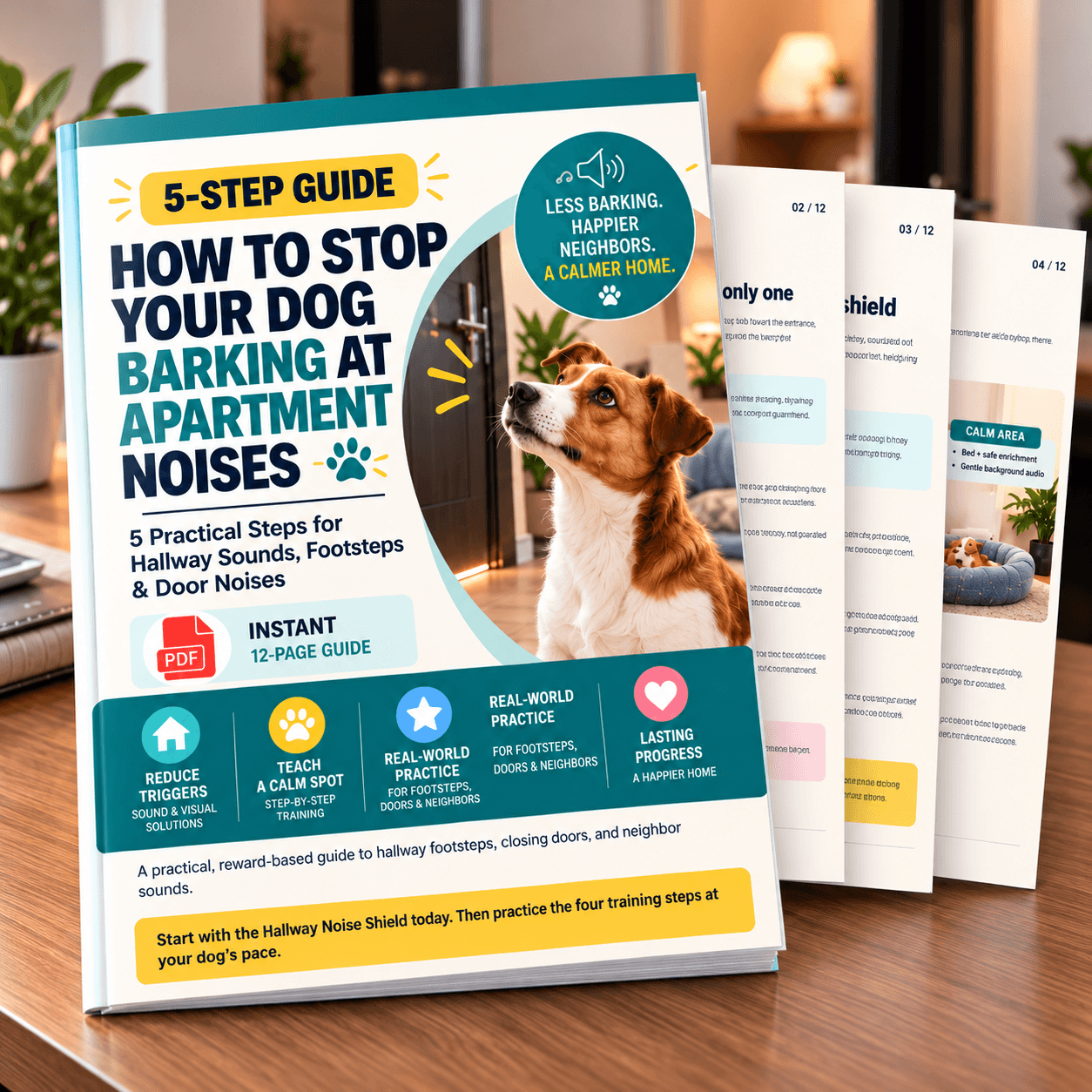
Tired of barking every time someone passes your door?
- Your dog starts barking whenever someone walks down the hallway.
- Keys jingling or a neighbor closing their door sets your dog off.
- You worry that the neighbors will complain about the noise.
- You struggle to concentrate or relax because your dog keeps reacting.
- You don't know whether to distract your dog, reward them, or wait for the barking to stop.
- You have tried background noise but aren't sure how to use it effectively.
- You want to help your dog feel calmer without yelling or punishment.
Inside
What's inside the 12-page guide
- 01
Start here
Understand what the guide is designed to help with and what realistic progress can look like.
- 02
The Hallway Noise Shield
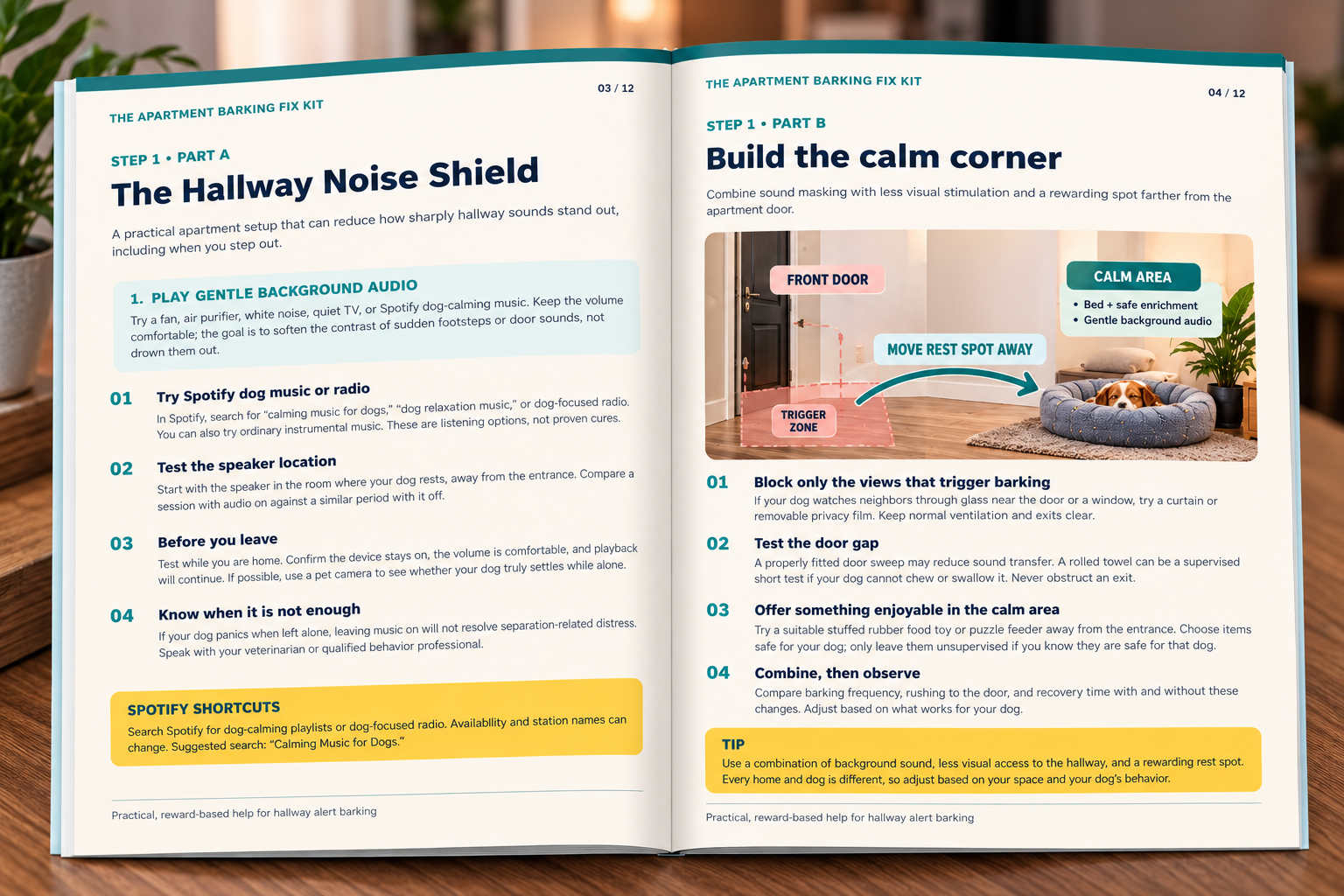
Learn how to use a fan, TV, white noise, or calming dog music to make outside sounds less noticeable.
- 03
Build a calm corner
Choose a comfortable resting spot away from the apartment door and reduce unnecessary noise and visual triggers.
- 04
Teach your dog to go to bed
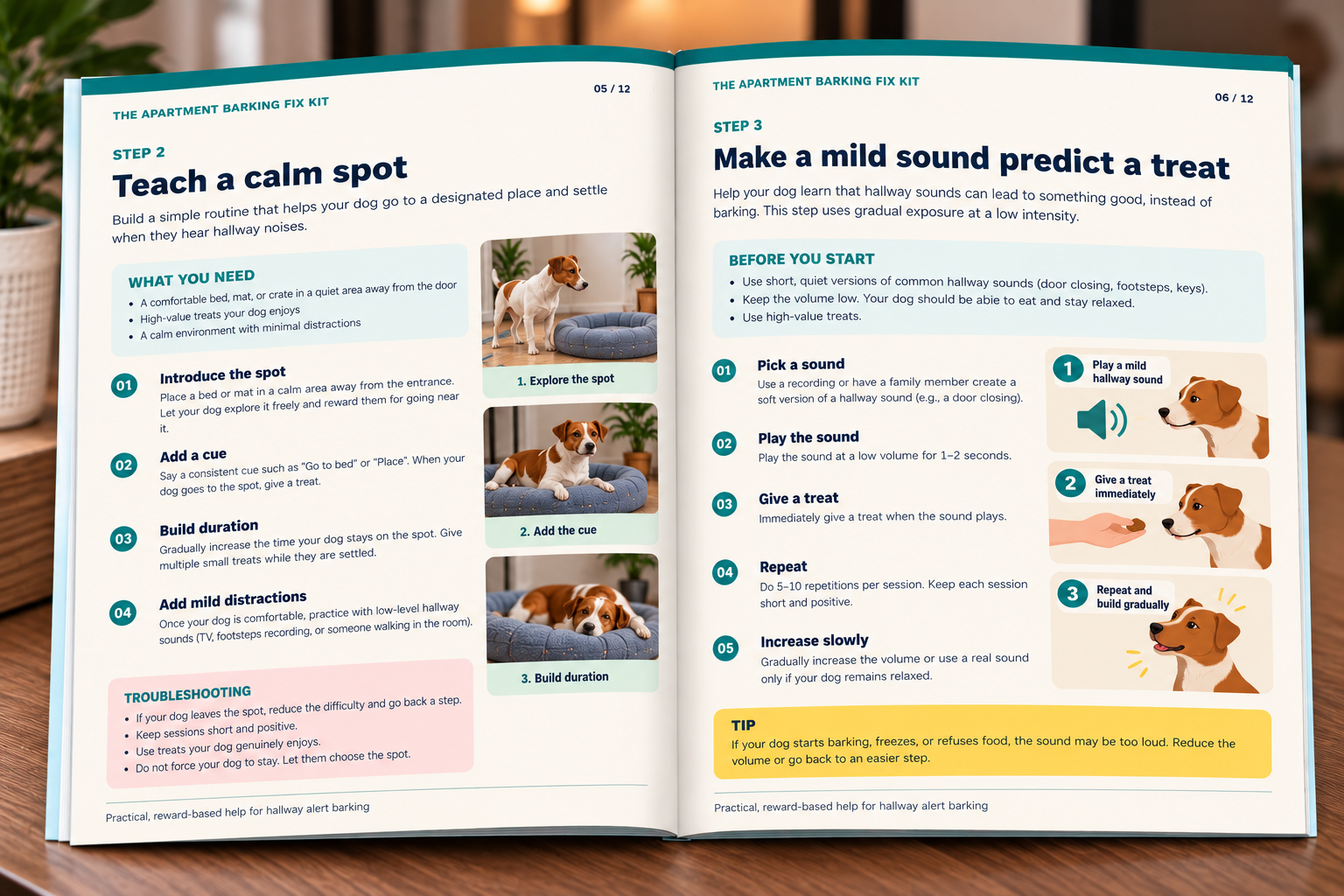
Use small, reward-based steps to teach your dog to approach their bed, settle briefly, and respond to a cue.
- 05
Make mild sounds predict treats
Practice pairing manageable hallway sounds with rewards so your dog can begin forming a different response.
- 06
Know when to reward or reset
Learn how to recognize when an exercise is too difficult and how to make the next practice easier.
- 07
Practice with real hallway noises
Apply the exercises to everyday apartment sounds without pushing your dog beyond what they can comfortably handle.
- 08
What to do when barking happens
Follow practical steps when your dog reacts despite your preparation and training.
- 09
Troubleshooting common problems
Work through six common apartment barking situations and ways to adjust your approach.
- 10
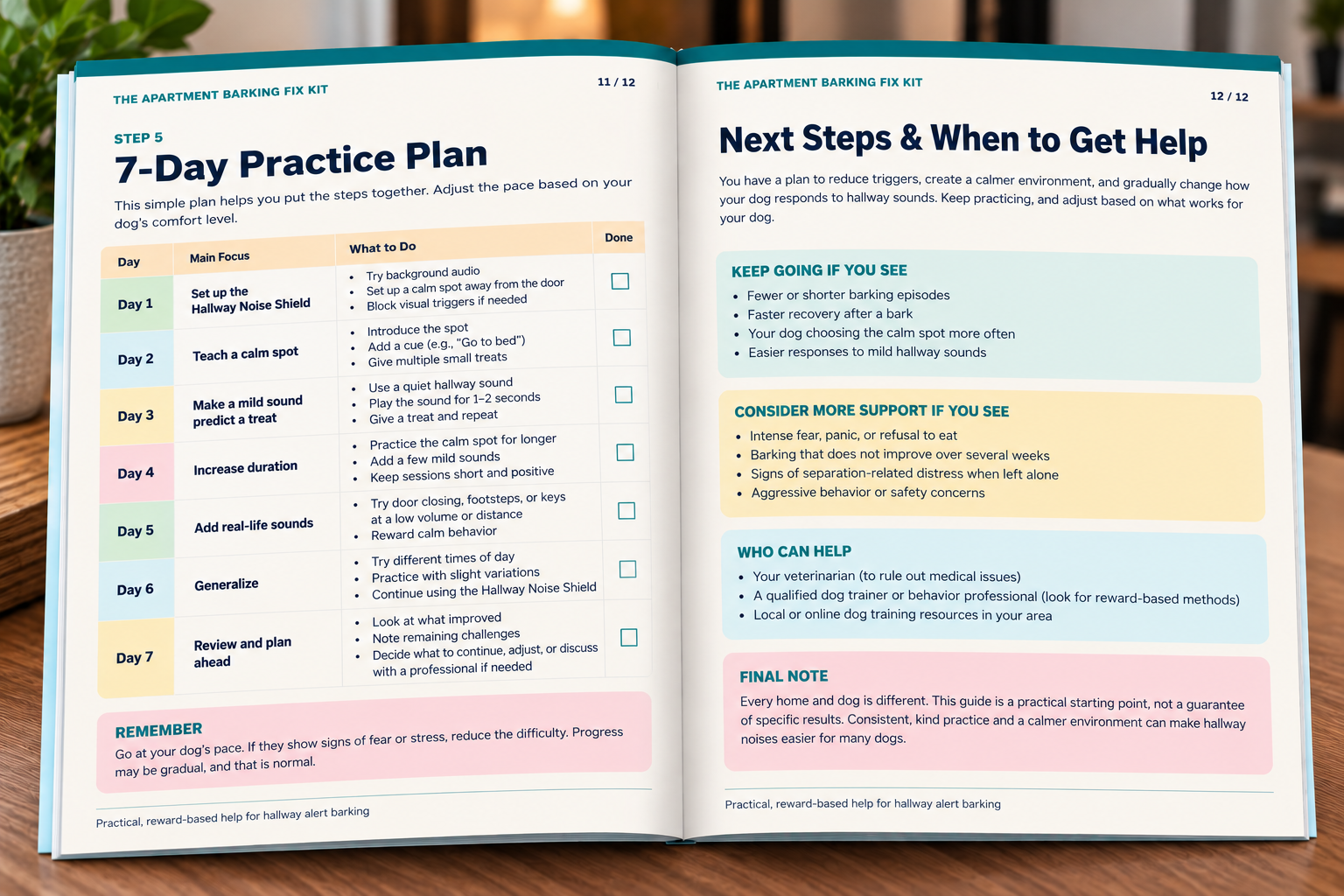
7-day starter plan
Follow a day-by-day practice schedule that introduces the setup and training exercises gradually.
- 11
Progress tracker
Record your dog's reactions and practice sessions so you can notice changes and decide what to adjust.
- 12
Apartment quick reference
Keep the main steps handy, along with guidance on when additional professional help may be appropriate.
Preview
Take a look inside
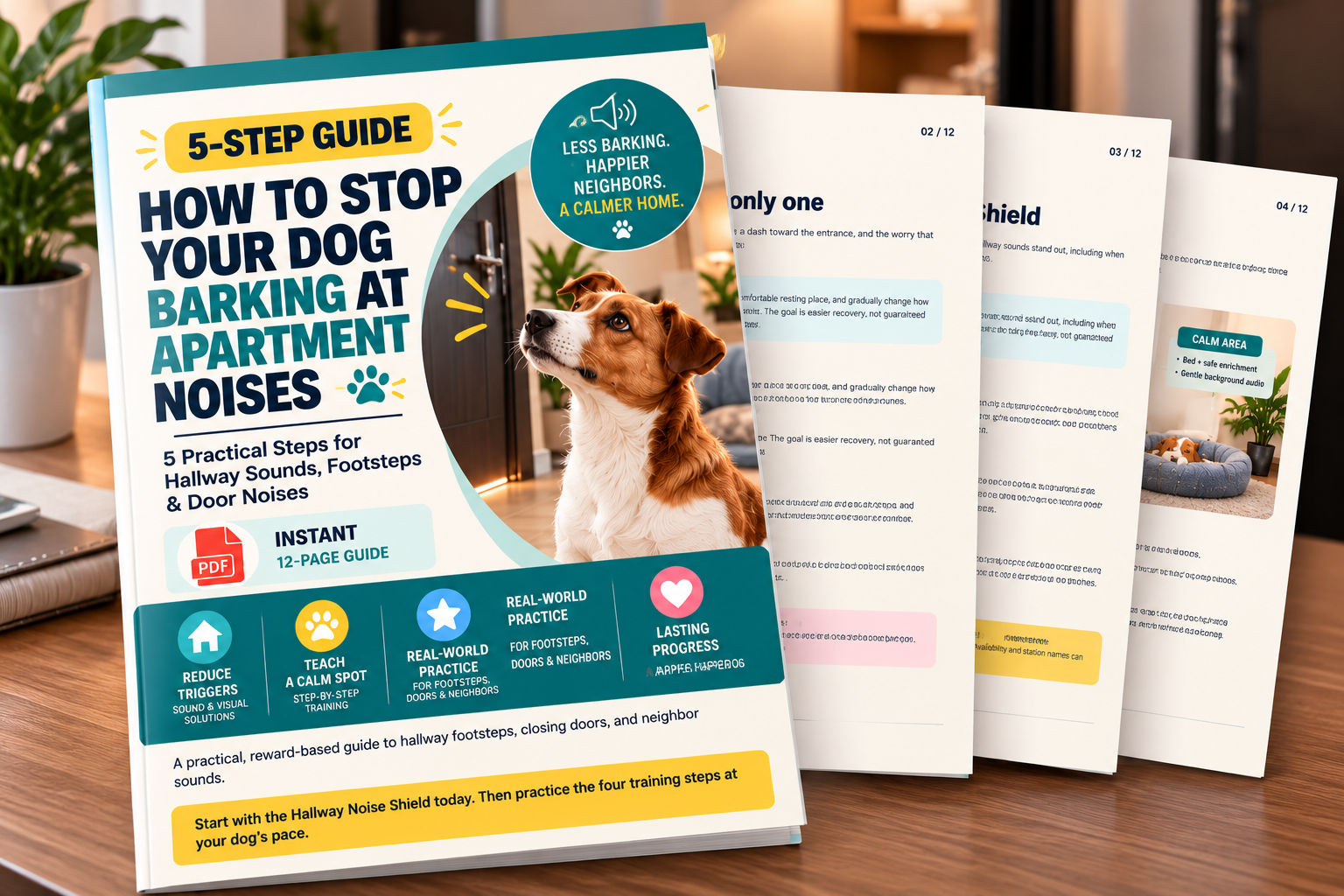
Preview the guide before you get it. See the hallway noise setup, calm-corner instructions, training exercises, and 7-day starter plan.
Tap any design to see it full size
Step by step
How to use the guide
- 1
Get your PDF
Purchase the guide and download the 12-page PDF.
- 2
Make your apartment easier to manage
Start with the Hallway Noise Shield and calm-corner setup to reduce the impact of everyday triggers.
- 3
Practice simple training exercises
Teach your dog to settle on their bed and pair manageable hallway sounds with rewards.
- 4
Follow the 7-day starter plan
Use the daily practice plan to build a routine without rushing through difficult exercises.
- 5
Track progress and adjust
Record what happens, repeat easier exercises when needed, and use the troubleshooting section when problems come up.
Who it's for
Who this guide is for
- Apartment dog owners dealing with barking at hallway sounds
- People whose dogs react to footsteps, keys, or doors outside
- Dog owners worried about noise complaints from neighbors
- People looking for practical, reward-based training exercises
- Owners who want a simple routine they can practice at home
- People who need help knowing what to do when their dog starts barking
Get the Apartment Barking Fix Kit
- 12-page downloadable PDF guide
- Hallway Noise Shield setup
- Calm-corner instructions
- Go-to-bed training exercises
- Sound and reward training steps
- Real hallway noise practice
- Barking response guidance
- Troubleshooting section
- 7-day starter plan and progress tracker
- Apartment quick-reference page
Secure checkout by Whop
FAQ
Questions before you start?
Will this stop my dog barking in seven days?
The guide includes a 7-day starter plan, not a guaranteed cure. Every dog responds differently. The goal is to build calmer routines and gradually improve how your dog responds to apartment noises.
What kinds of barking does this guide focus on?
It focuses on barking triggered by apartment sounds, especially footsteps, keys, doors, and other noises coming from the hallway.
Do I need special equipment?
The guide uses everyday items such as a comfortable dog bed or mat, treats, and optional background sound from a fan, TV, white noise, or calming music. It does not require specialized training equipment.
Does the guide use punishment or bark collars?
No. The exercises focus on reward-based training, making the environment easier for your dog, and practicing with manageable sounds.
Can I use white noise or Spotify dog music?
Yes. The guide explains how background sounds such as white noise and calming dog music can be used as part of the Hallway Noise Shield. These are management tools, not a complete replacement for training.
What if my dog still barks during training?
The guide includes steps for responding when barking happens, recognizing when an exercise is too difficult, and adjusting practice. It also includes troubleshooting for common apartment situations.
Is this suitable if I am new to dog training?
The exercises are explained step by step, starting with simple setup changes and basic reward-based practice before introducing more realistic hallway sounds.
Does the guide explain how to teach my dog to settle?
Yes. It includes a go-to-bed exercise that starts with rewarding your dog for approaching a bed or mat and gradually builds toward staying there briefly and responding to a cue.
What if hallway sounds make my dog very frightened?
The guide emphasizes working with sounds your dog can comfortably handle and making exercises easier when needed. It also includes guidance about seeking professional help when appropriate.
Is this a video course or a PDF?
It is a 12-page PDF guide with written instructions, practical exercises, a 7-day starter plan, a progress tracker, and a quick-reference page.
Do I have to follow the seven days exactly?
No. The plan is a starting structure. You can repeat easier exercises and adjust the pace based on how comfortably your dog responds.
Will this help with barking at noises outside my apartment door?
That is the main problem the guide addresses. It covers ways to reduce the impact of hallway sounds, teach alternative responses, and practice gradually with everyday apartment noises.
Give your dog a calmer way to handle hallway noise
You don't have to keep guessing what to do every time someone walks past your door. Start with a quieter setup, practice simple reward-based exercises, and use the 7-day plan to build a routine that works for your dog.
Secure checkout by Whop
Reviews
What Dog Owners Are Saying
Every time someone walked past our apartment door, my dog would start barking. I liked that the guide gave me simple steps instead of overwhelming me with training advice.
Emily ParkerAustin, TX The white noise and calm corner ideas were really practical. I didn't realize how much the apartment setup mattered before even starting the training exercises.
Jessica MillerDenver, CO I work from home, and the hallway barking was driving me crazy. Having a routine to follow made it easier to know what to practice each day.
Sarah ThompsonChicago, IL My biggest worry was getting another complaint from the neighbors. I appreciated that the guide focused on manageable steps and didn't promise an overnight fix.
Michael RobertsSeattle, WA I had tried playing music before, but I never knew how to combine that with actual training. The explanation of rewarding calmer responses was helpful.
Rachel AdamsPortland, OR The 7-day plan was my favorite part. Everything was broken into smaller exercises, and the progress tracker helped me stay organized.
Daniel FosterBoston, MA